

Overview of Lesson:
Dr. T. Gertrude Jenkins is a veteran K-12 English teacher and currently an assistant professor and program director for the Transformative Action in Education program at the University of the Pacific in Stockton, CA. Gertrude’s research is deeply rooted in the liberatory practices of Black educators—particularly, Black women educators—and the pedagogies they employ to subvert exclusionary mechanisms embedded in K-12 school systems, both within and without the institution. Gertrude’s work is motivated by her desire to freedom dream alternative educational spaces that are resistant to the manifestations of systemic antiblackness.
Author: Dr. T. Gertrude Jenkins
Student Work
- Forthcoming (TBC, 3/7)
Lesson Plan
Through A Lense of Audacity:
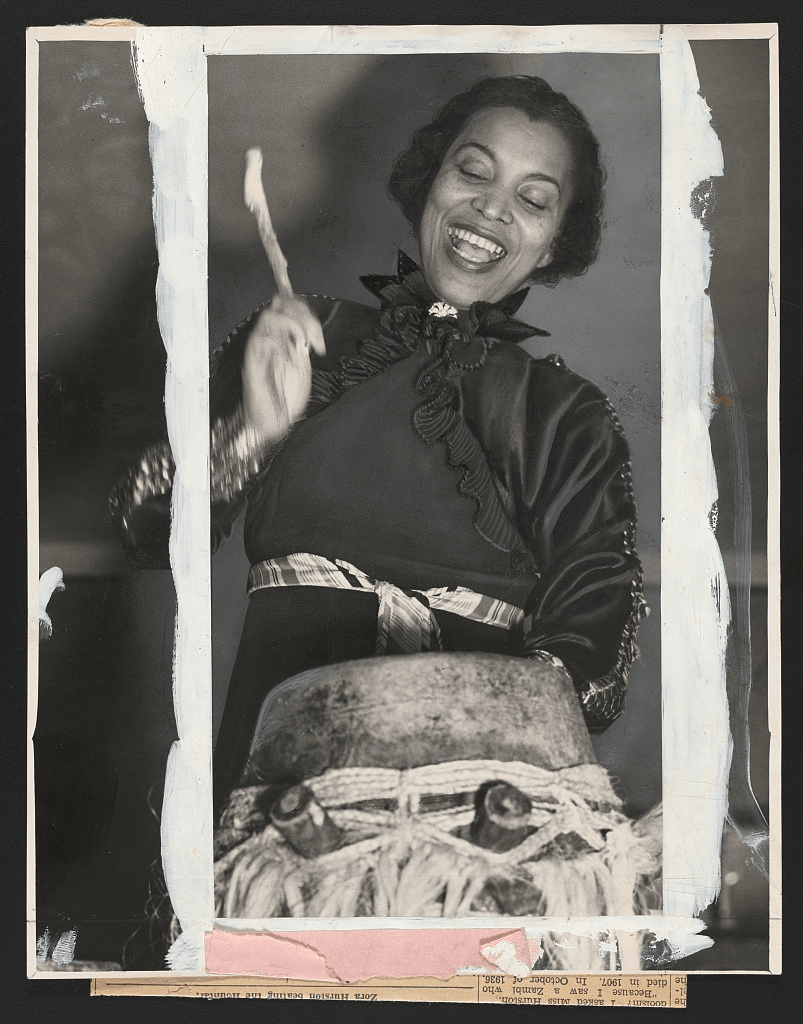
Centering the methodological praxis of the people’s anthropologist, Zora Neale Hurston, this lesson invites students to explore the nature of refusal and space making that is so often embedded in Black intellectual praxis.
Students will engage in discussions and activities that allow them to unpack Hurston’s intersectionality positionality and how she operationalized her identity as a powerful tool in qualitative research methodology.
Library of Congress Resources:
- https://www.loc.gov/collections/
- https://www.loc.gov/collections/florida-folklife-from-the-works-progress-administration/
- https://www.loc.gov/item/podcasts/2009-06-29/wallace-quarterman-voices-from-the-days-of-slavery-stories-songs-and-memories/
Additional Resources
- Parks, F. M. (2018, January). Commandment Keeper Church. In Library of Congress, nd Web (Vol. 4).
- Kheshti, R. (2025). Zora Neale Hurston’s synaesthetic ethnography. The Senses and Society, 20(2), 244-252.
- Hurston, Z. N. (1928, May). How it feels to be colored me.
- American Experience |PBS. (2023, January 15). Zora Neale Hurston: Claiming A Space | Chapter One [Video]. Youtube. https://www.youtube.com/watch?v=IqLOKDxrdww
Instruction for Task(s):
Linked here