Overview of Lesson:
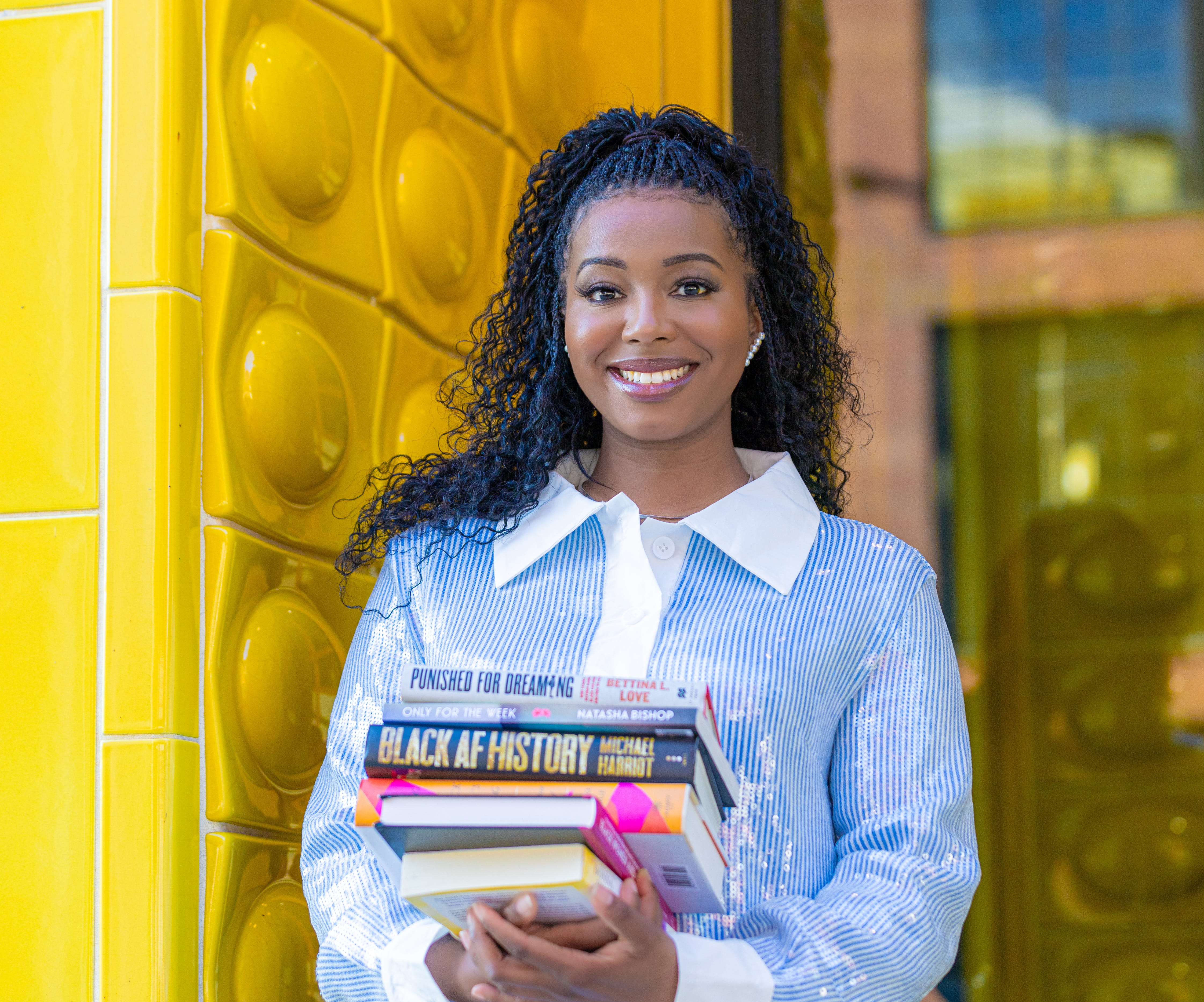
Jennifer N. Brooks is a scholar, educator, and literary curator whose work centers Black girlhood and literacy. Her research examines how Black girls use reading, writing, and other forms of expression to make sense of themselves in systems that often misrecognize them. Grounded in Black feminist thought, she studies homeplace as a space of safety, memory, and possibility. Brooks is also the founder of Asè Book Boutique, where she curates and promotes books by Black authors. Across her work, she focuses on creating space for Black expression, community, and ways of knowing that are often overlooked.
Author: Jennifer Brooks
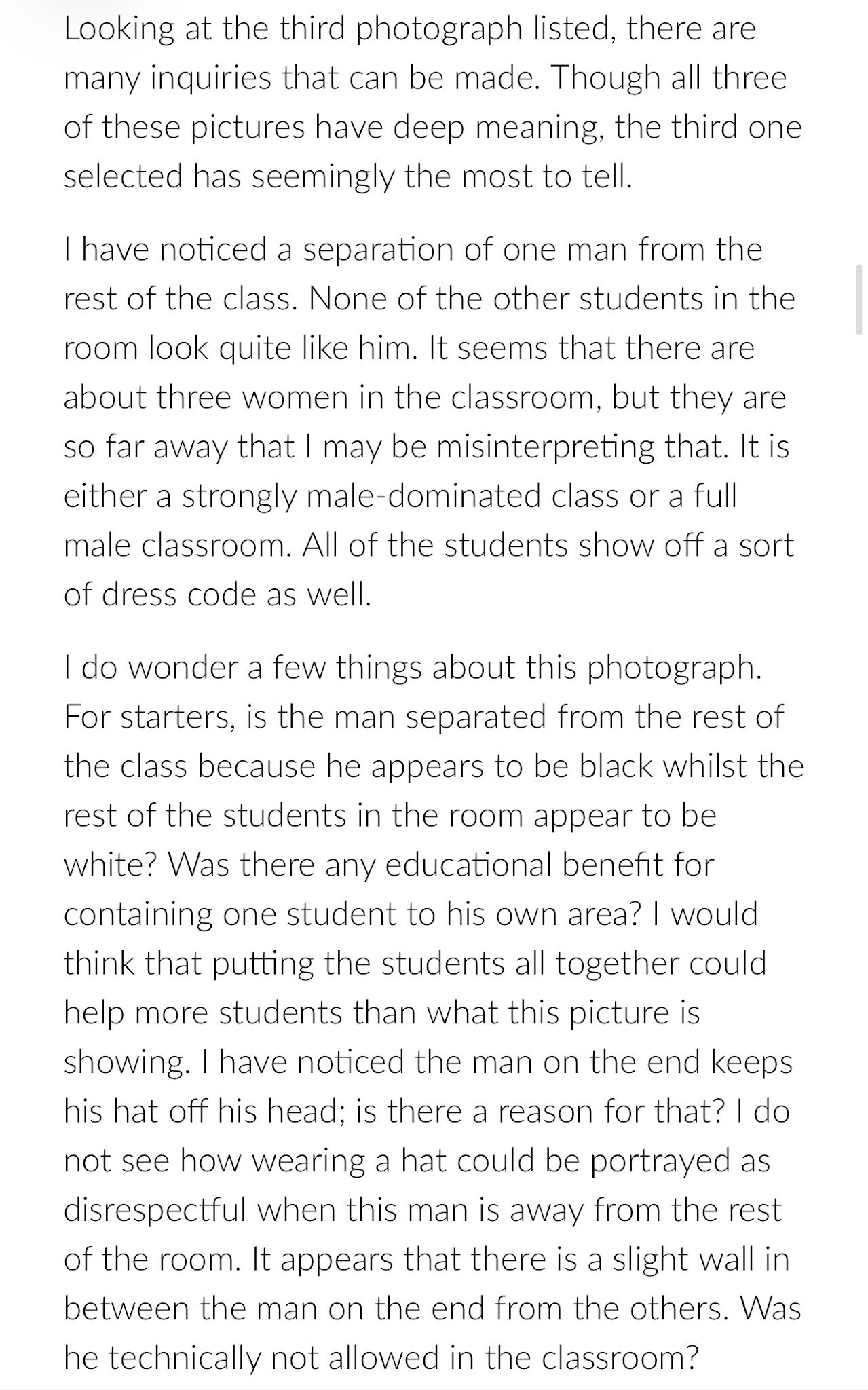
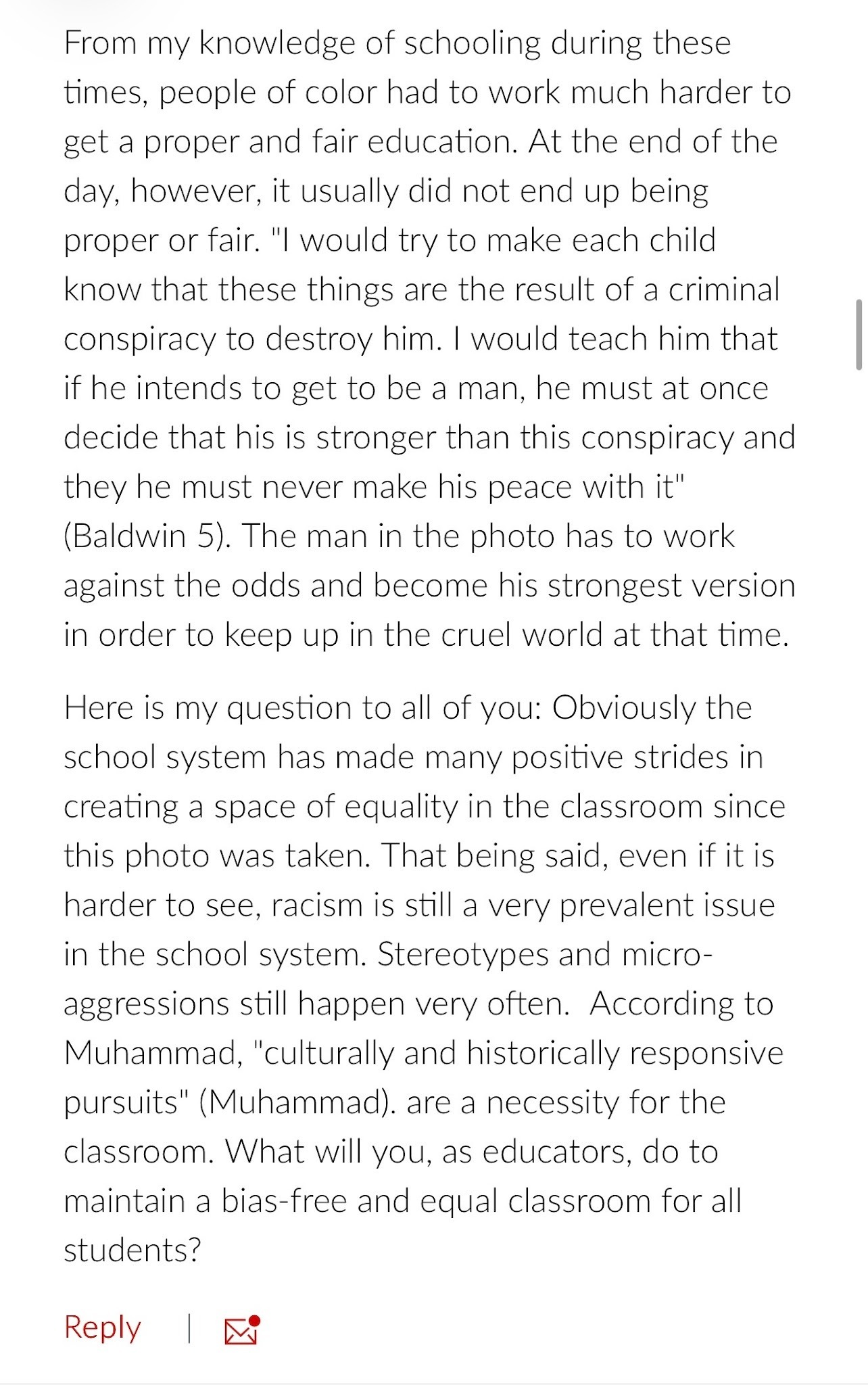
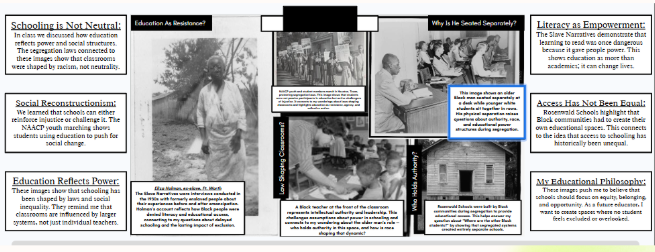
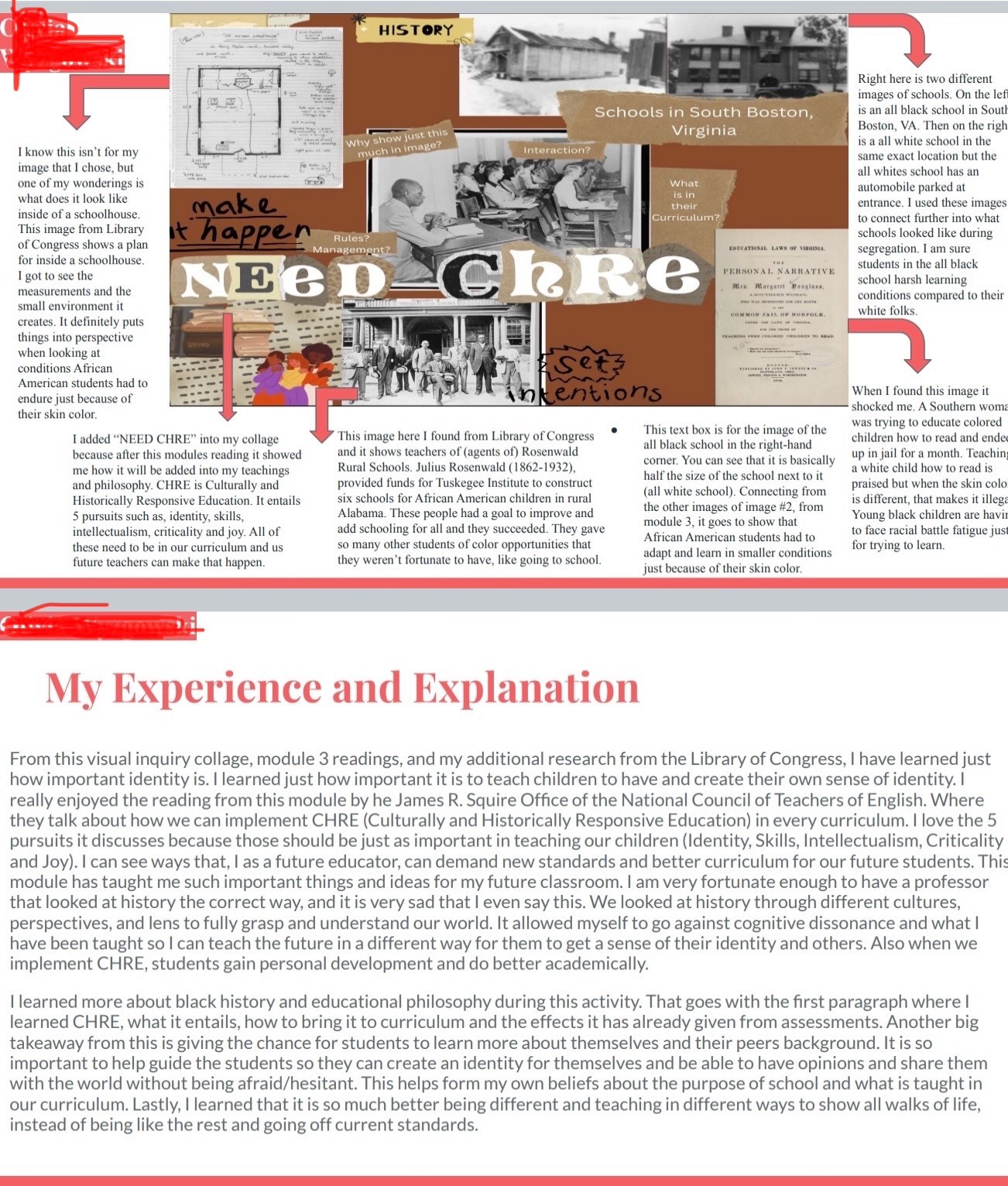
Student Work
Lesson Plan
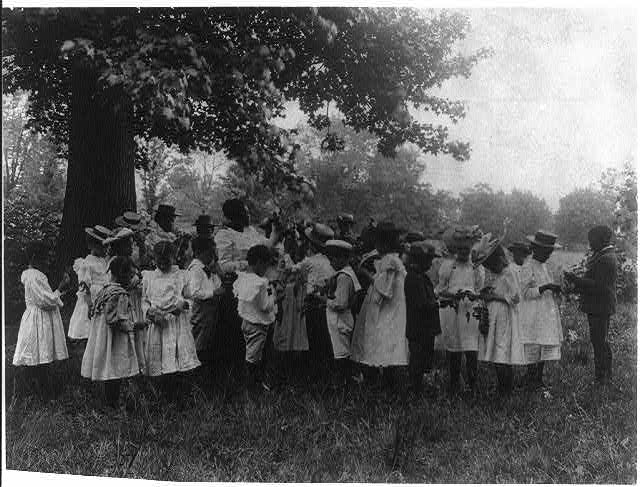
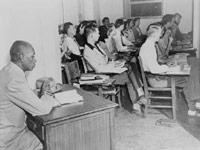
In this lesson, students develop their educational philosophy through visual inquiry and archival research focused on Black education. Students begin by observing historical images and generating questions about schooling, care, power, and access. These wonderings guide their exploration of Black education archives in the Library of Congress, where they locate additional primary sources to deepen their understanding.
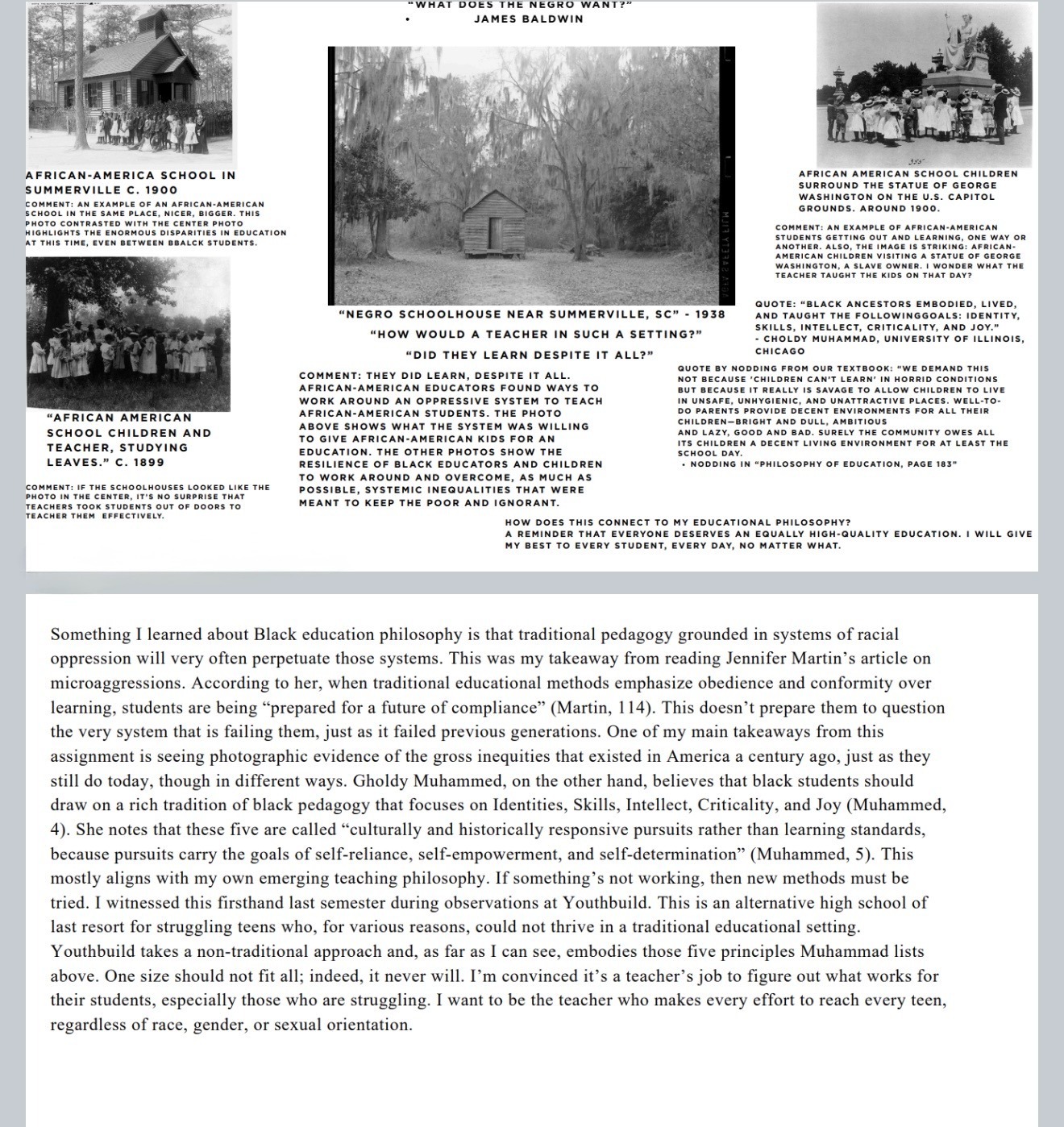
Students connect their observations and research to course readings, including Noddings and Emdin, and to the educational philosophies studied in the course. They then synthesize their learning by creating a one-slide visual collage using Google Slides that brings together images, archival sources, marginal notes, and reflection.
The lesson concludes with students articulating what they learned about Black educational philosophy, how it connects to their own beliefs about education, and how it informs the way they want to show up in their future professional roles.
Library of Congress Resources:
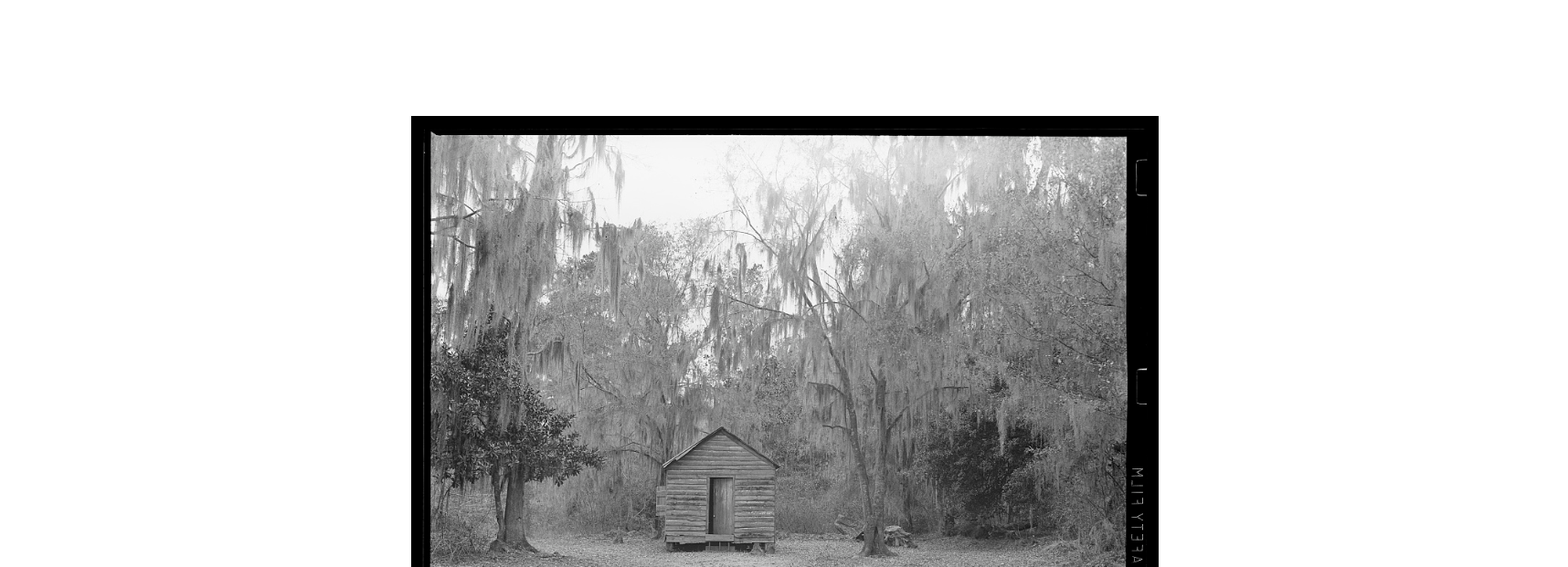
In a discussion post, students will follow the Notice/Wonder protocol by selecting one of the following photos to guide their inquiry:
- https://www.loc.gov/resource/fsa.8c09557/
- https://www.loc.gov/pictures/resource/cph.3a27179/
- www.loc.gov/exhibits/brown/brown-segregation.html#obj47
Students can use the following links to support their projects:
Instruction for Task(s):
PT 1: Notice and Wonder Discussion: What Students Need to Do
- Review the three archival images posted in the discussion post.
- Choose one image to focus on and clearly state which image you selected in your post.
- Write a Notice section where students describe only what they see in the image. Focus on observable details without explaining or interpreting meaning.
- Write a Wonder section where you pose questions and discuss what you want to know more about that emerge from what you noticed.
- Post initial response by the date listed in the module.
- Respond to at least three classmates by adding to their noticing or offering additional questions that deepen inquiry.
- Submit all discussion posts by the posted deadline.
PT 2: Visual Inquiry Collage
Slide 1
- Choose the archival image of Black education you focused on in the Notice and Wonder discussion.
- Students will use their “I wonder…” questions from the discussion to guide their research.
- Students will search the Library of Congress Black education archives for materials that help them learn more about their wonderings.
- Select at least two additional archival sources from the Library of Congress.
- Create one collage slide that includes:
- The original image you selected
- At least two additional Library of Congress sources
- Words or short phrases pulled from your wonderings
- Short captions explaining how each image or source helps you think about Black education and the educational philosophies discussed in this course
- The original image you selected
- Add at least six marginal notes using text boxes around the slide. These notes must:
- Connect the images to ideas from our course
- Reference ideas from the texts (texts include readings, media, images, etc.) in this course
- Explain how the images connect to your emerging educational philosophy
- Connect the images to ideas from our course
Slide 2:
Written Explanation
- Write one clear paragraph explaining:
- What you learned about Black educational philosophy from the images and archival sources
- How this learning connects to class texts
- How this aligns with or challenges your own beliefs about the purpose of school
- How this shapes how you want to show up in your future role in education