
Overview of Lesson:
Brittany L. Jones is an Assistant Professor in the Department of Learning and Instruction at the University at Buffalo. Informed by her experiences as a high school social studies educator, her scholarship examines how the intersections of race, emotions, and critical discourses shape history and civic education instruction, curriculum, and learning. Her work has been published in outlets such as Equity and Excellence in Education, Theory and Research in Education, Harvard Educational Review, and the International Journal of Qualitative Studies in Education.
Author: Brittany L. Jones
Student Work
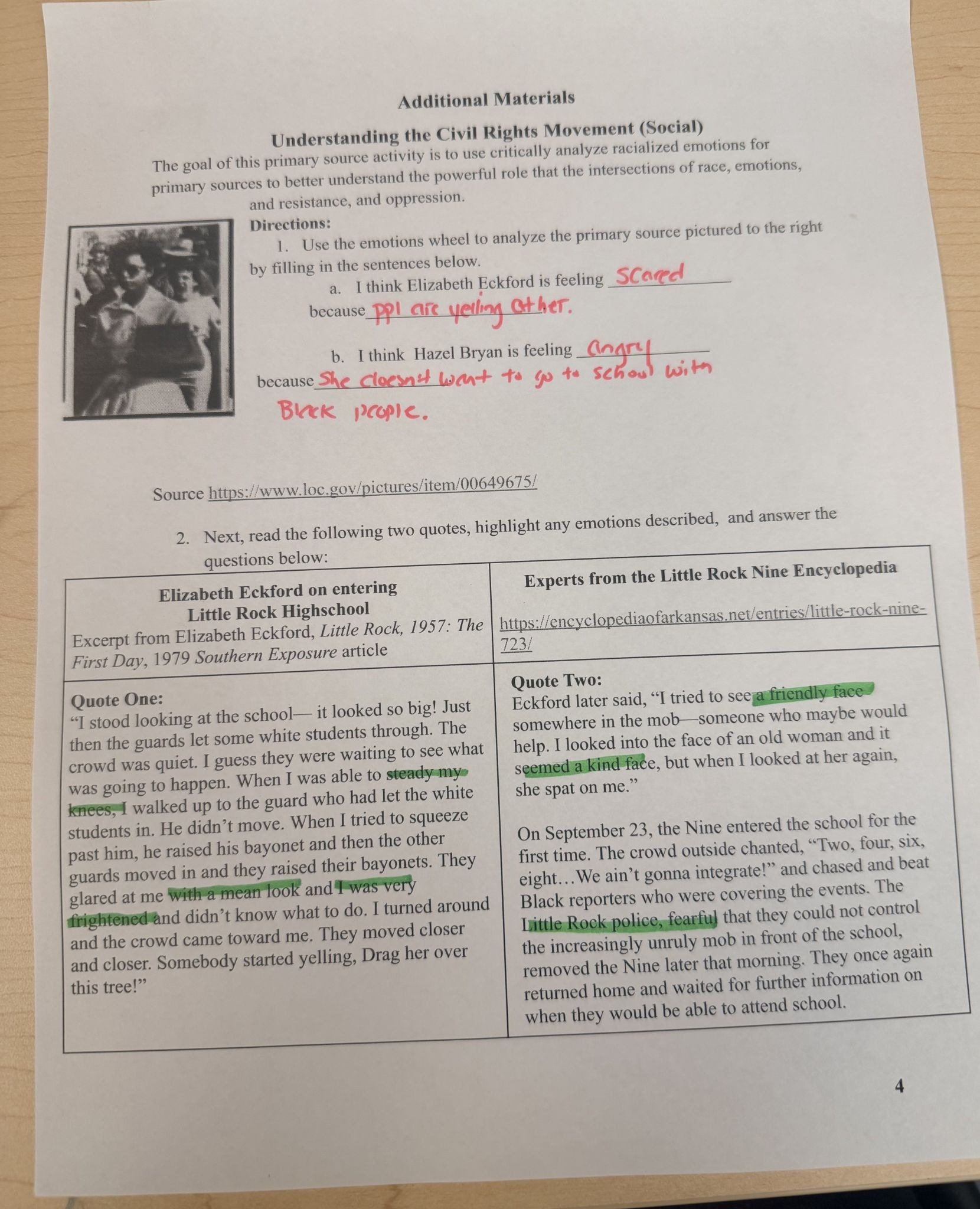
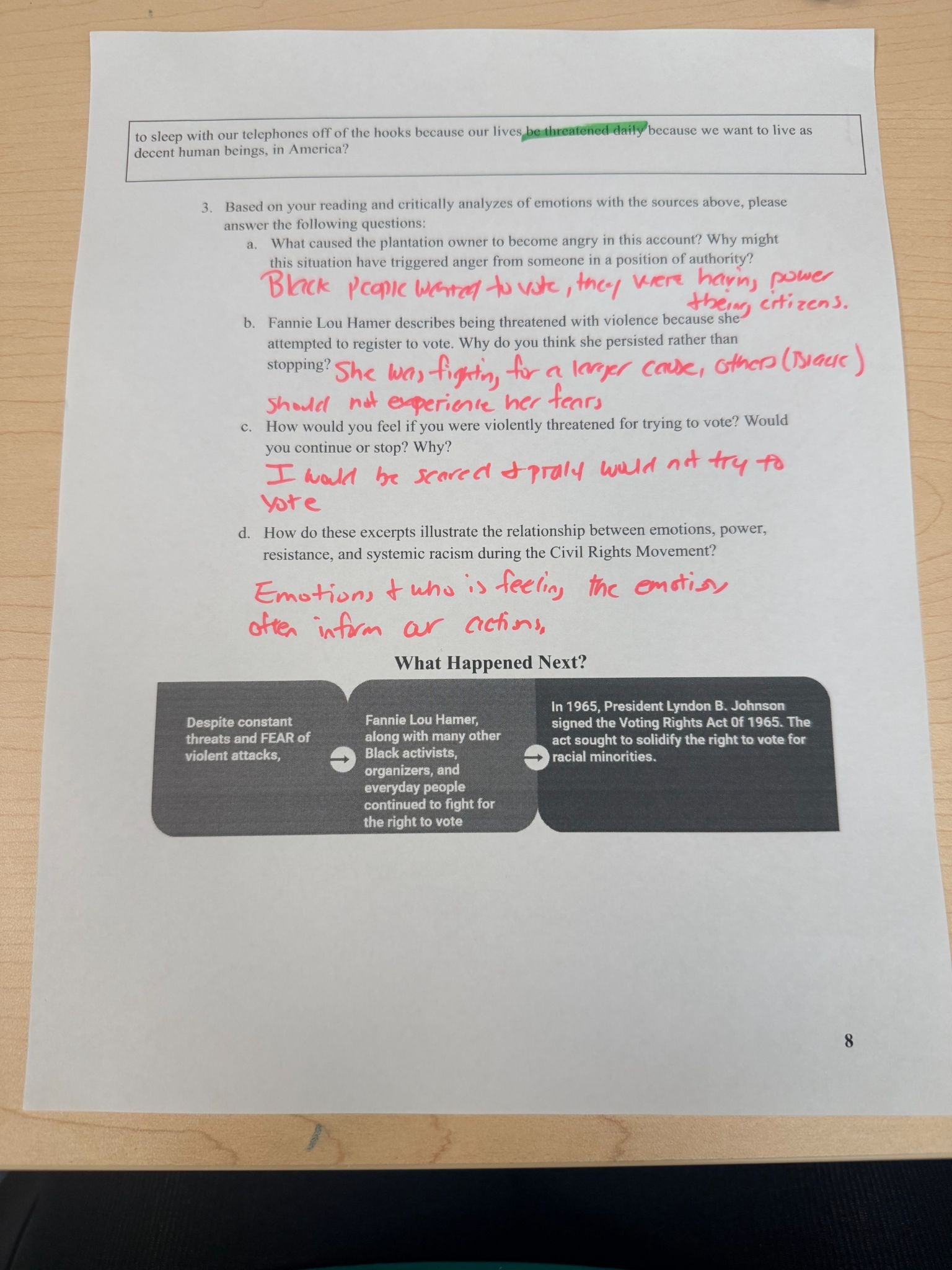
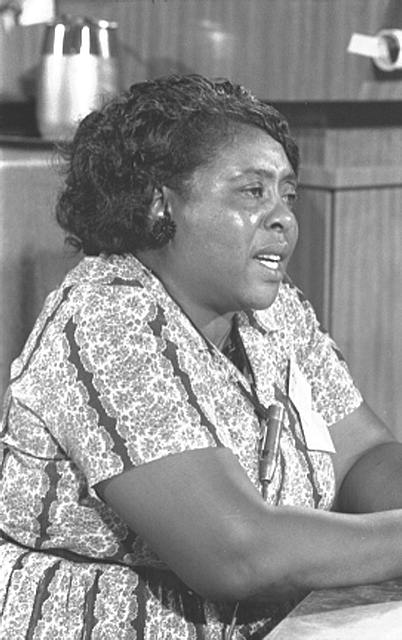
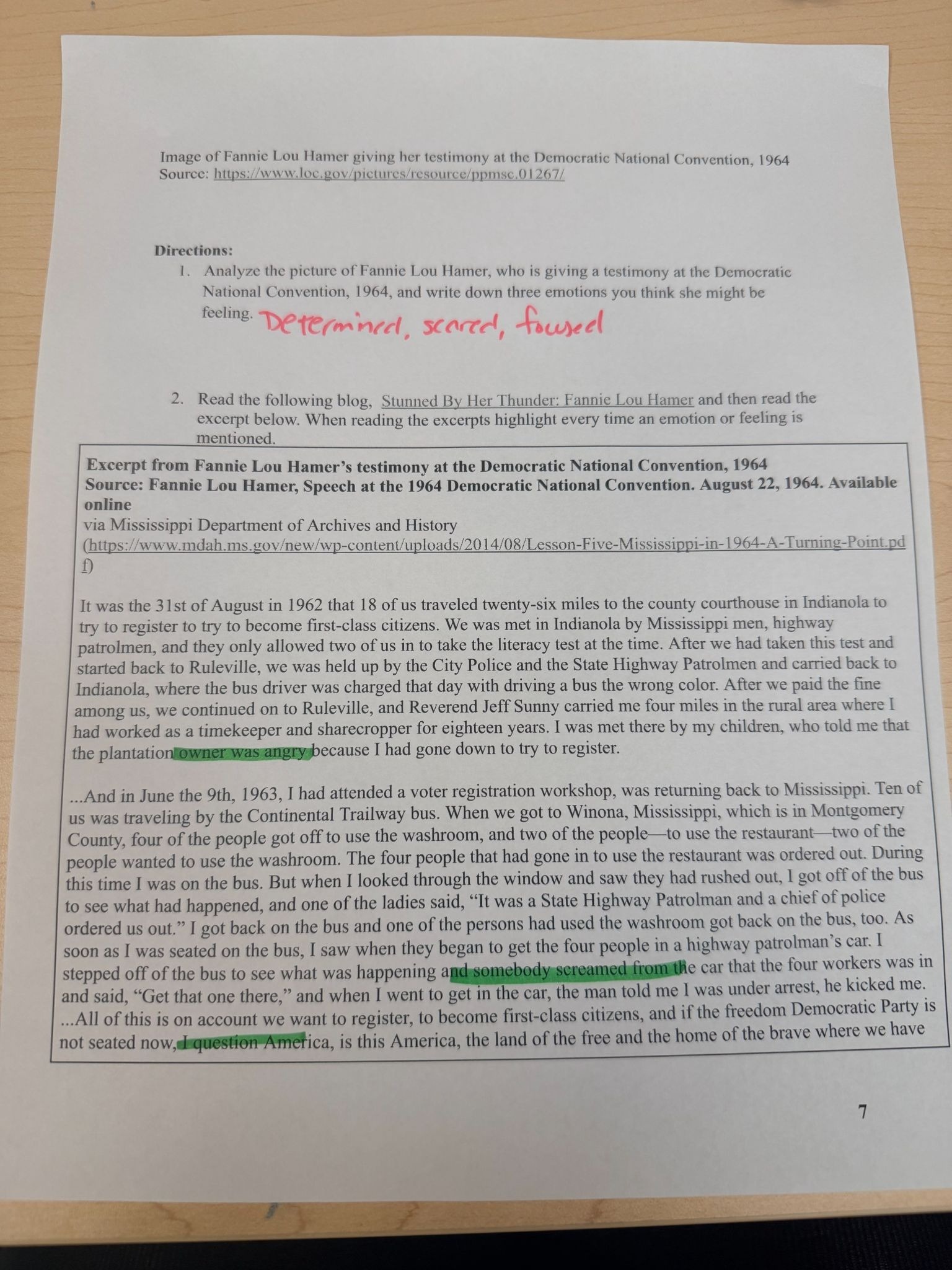
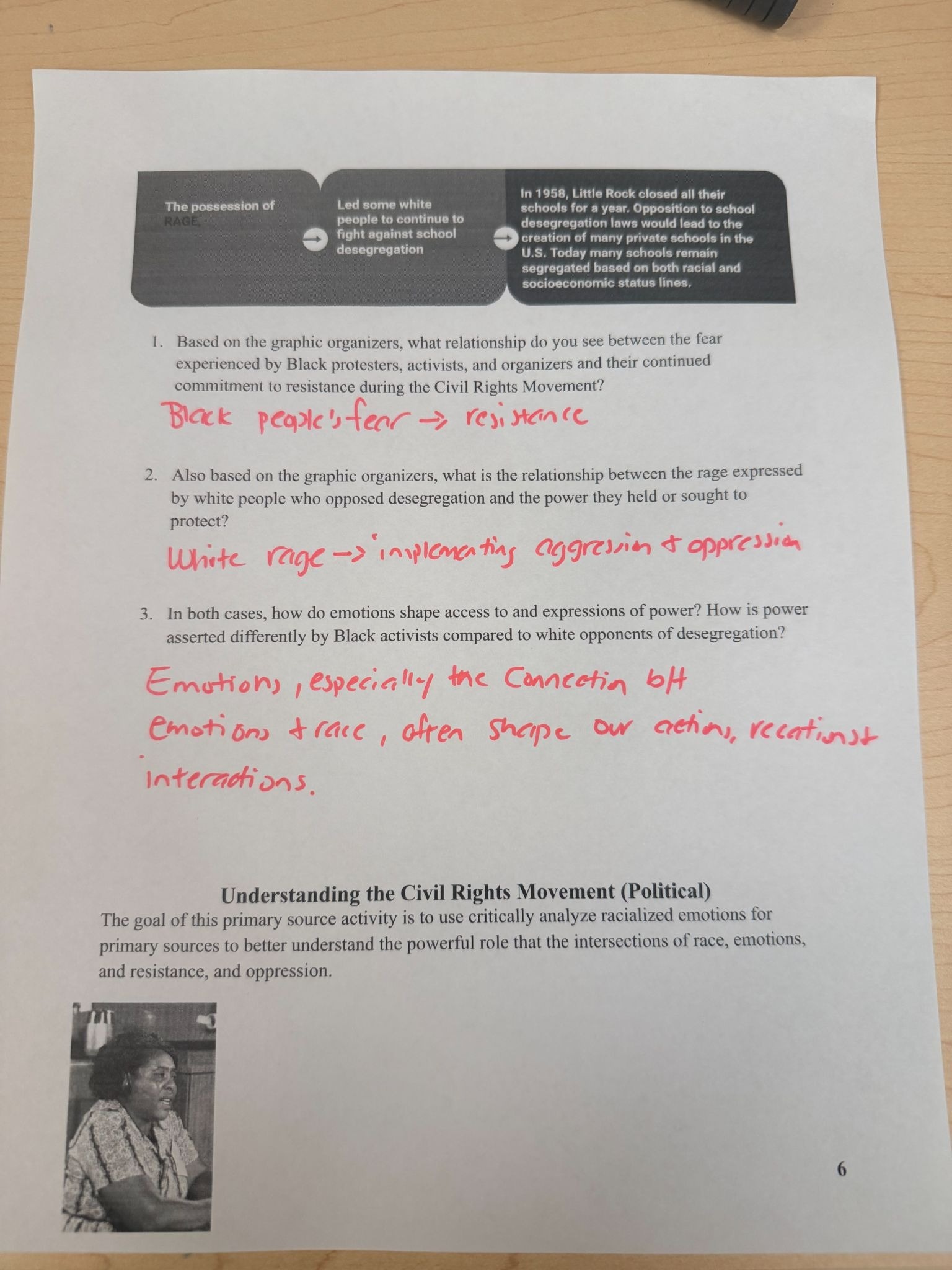
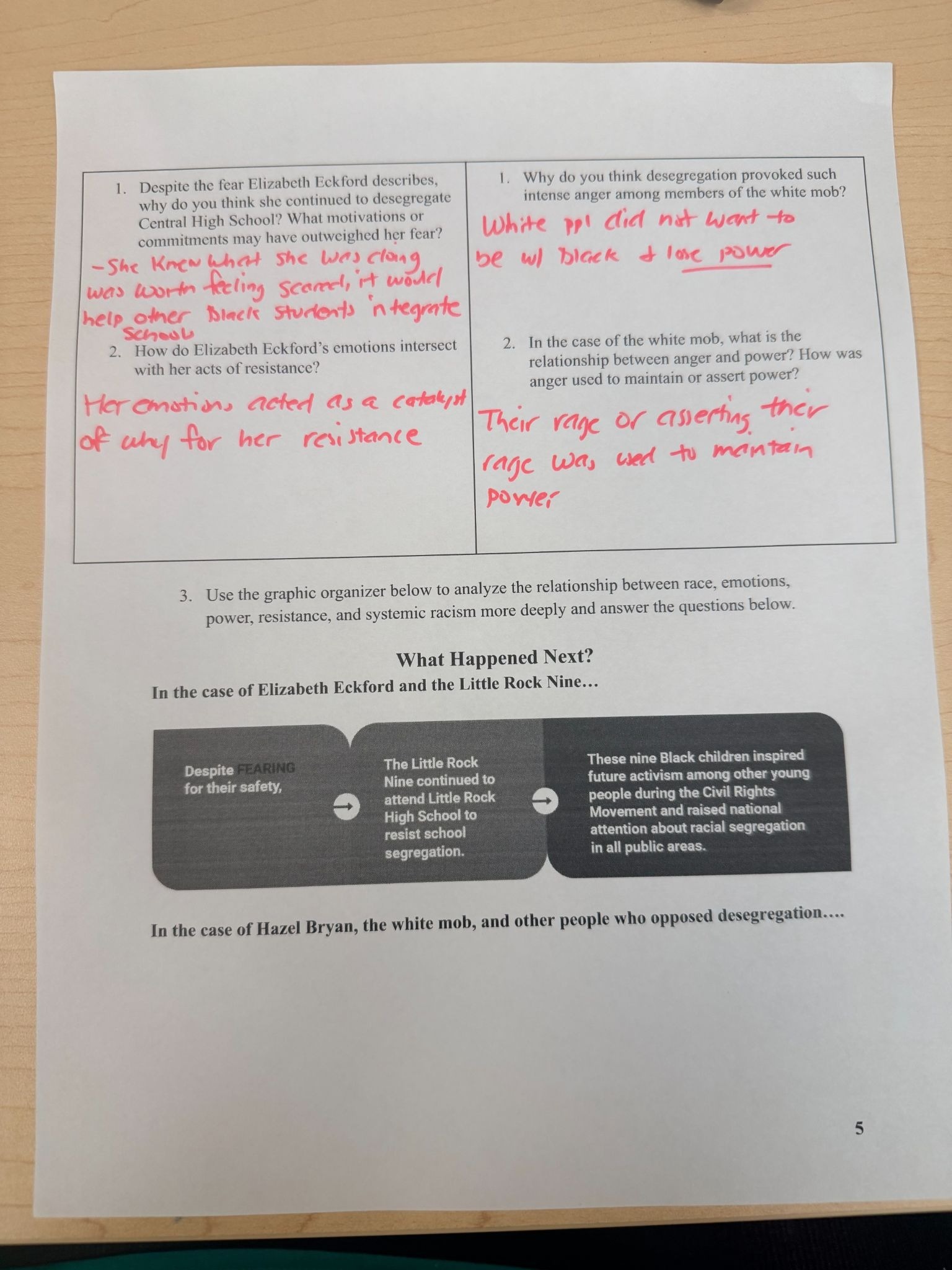
Lesson Plan
Researchers have found that instruction on the Civil Rights Movement often frames racism as the result of individual acts rather than as a systemic and structural phenomenon (Martell & Stevens, 2017; Wills, 2019). This lesson draws on my Critical Analysis of Racialized Emotions (CARE) framework, alongside primary sources from the Library of Congress, to guide students in examining the intersections of race, emotions, resistance, and systemic racism during the Civil Rights Movement. Specifically, the lesson foregrounds how racialized emotions functioned as a form of power—both in the production and maintenance of racist policies and in the mobilization of collective resistance—illustrating how emotions shaped socio-political action in divergent ways depending on one’s racialized positioning.
Library of Congress Resources:
- Troops block Negro students at school
- Stunned By Her Thunder: Fannie Lou Hamer
- Fannie Lou Hamer, Mississippi Freedom Democratic Party delegate, at the Democratic National Convention, Atlantic City, New Jersey, August 1964
- Excerpt from Elizabeth Eckford, Little Rock, 1957: The First Day, 1979 Southern Exposure article (see below)
- Experts from the Little Rock Nine Encyclopedia
- Excerpt from Fannie Lou Hamer’s testimony at the Democratic National Convention, 1964
Instruction for Task(s):
See lesson plan below
- Provide an examplar of a student’s completed the task.
- Please remove their name.