

Overview of Lesson:
Natasha Thornton, Ph.D. is an Assistant Professor of Elementary Education at Spelman College in Atlanta, GA. Her work focuses on culturally responsive literacy instruction, the intersection of teachers’ beliefs and practices, and centering the legacy of Black educators in teacher education. Passionate about addressing the gap between theory and practice, she develops literacy materials that highlight stories of Black history and excellence and is a co-author of the book Revolutionary Love: Creating a Culturally Inclusive Literacy Classroom. Prior to joining Spelman, Dr. Thornton served on the faculty at Kennesaw State University, where she co-founded the #BlackTeachersMatter student organization.
Author: Natasha Thornton
Student Work
Lesson Plan
Adult and Family Literacy Course
Community, Literacy, and Liberation: Lessons from the Black Panther Party
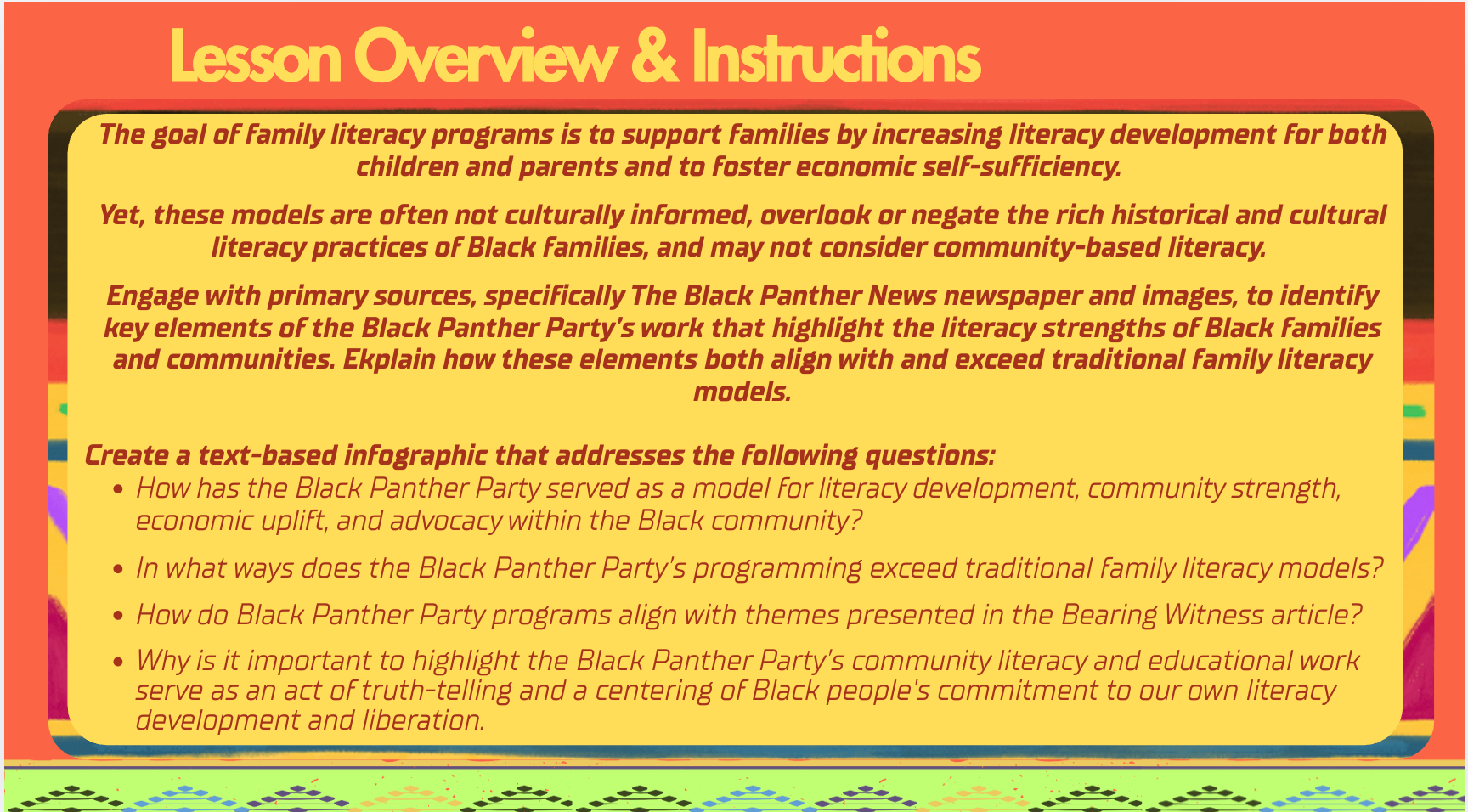
Students will explore how the Black Panther Party’s (BPP) principles and programming align with, and exceed, traditional family literacy models. The goal of family literacy programs is to support families by increasing literacy development for both children and parents and to foster economic self-sufficiency. Yet, these models are often not culturally informed, overlook or negate the rich historical and cultural literacy practices of Black families, and may not consider community-based literacy.
Library of Congress Resources:
- https://files.libcom.org/files/2024-02/Vol_III_No4_May_1969.pdf
- https://files.libcom.org/files/2025-03/Vol_III_3_May_1969.pdf
- https://www.loc.gov/item/2003688170/
- https://www.youtube.com/watch?v=IrZIEMrmVrw
Instruction for Task(s):
Assignment Instructions
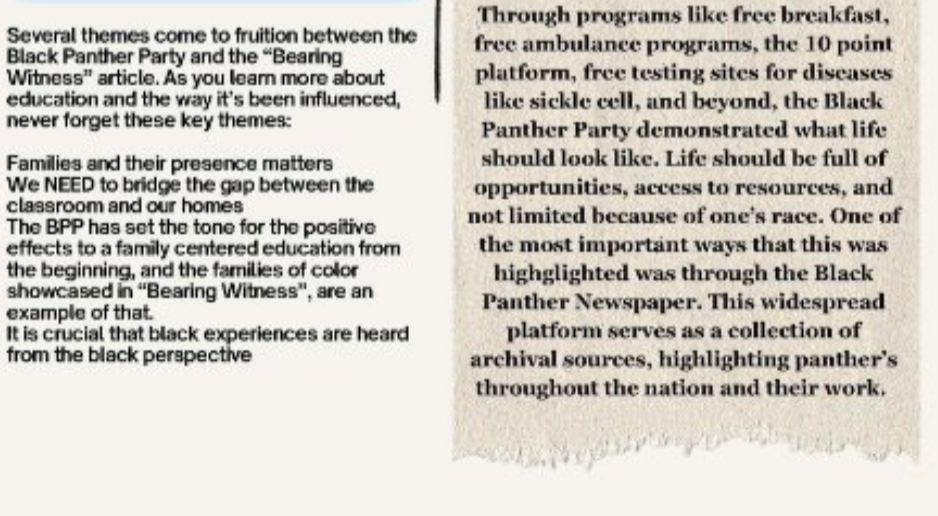
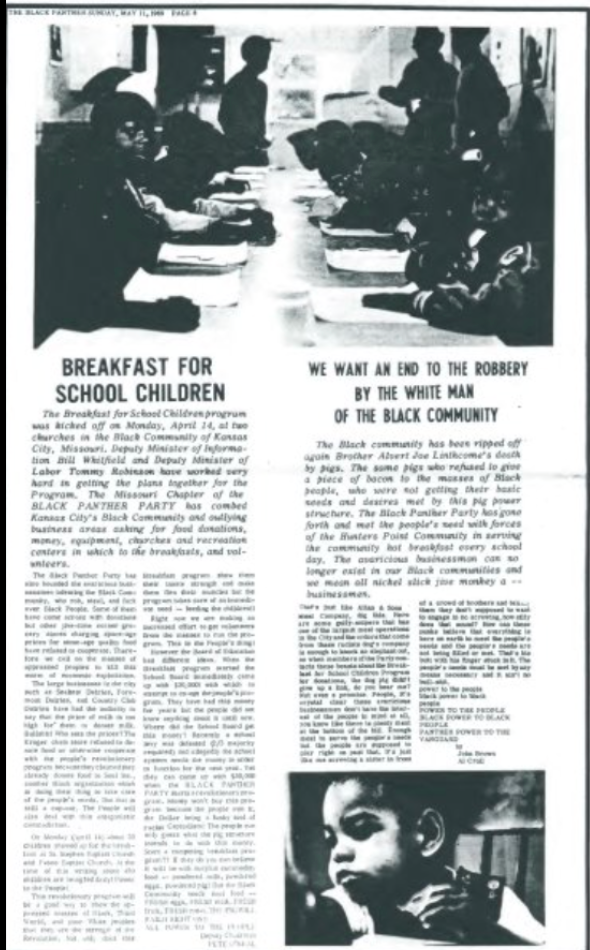
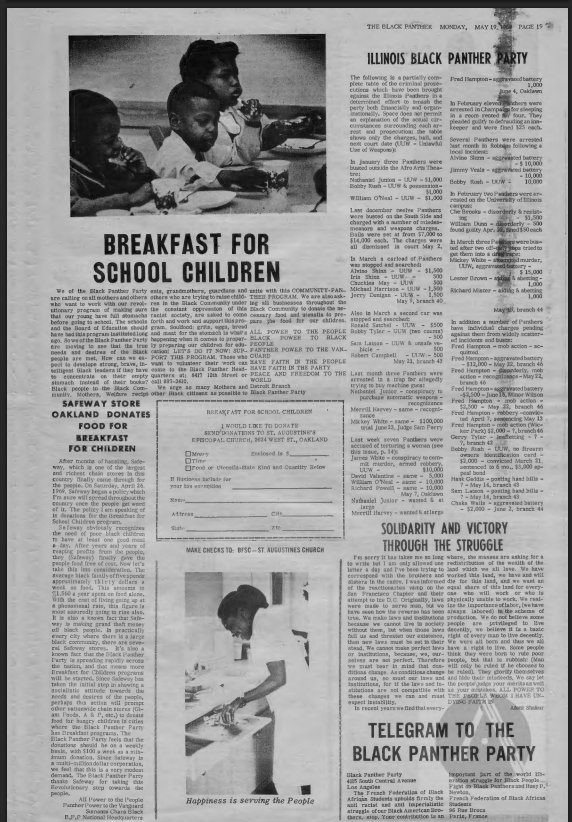
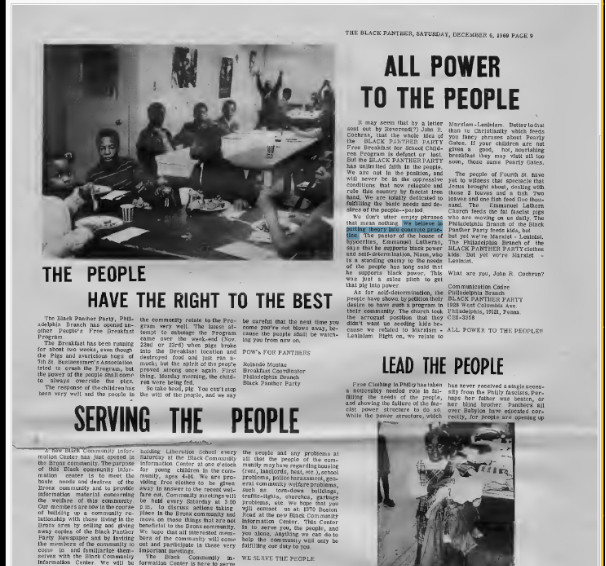
For this assignment, you will engage with primary sources, specifically The Black Panther News newspaper, to identify key elements of the Black Panther Party’s work that highlight the literacy strengths of Black families and communities. You will examine how these elements both align with and exceed traditional family literacy models.
Students will create a text-based info graphic that addresses the following questions:
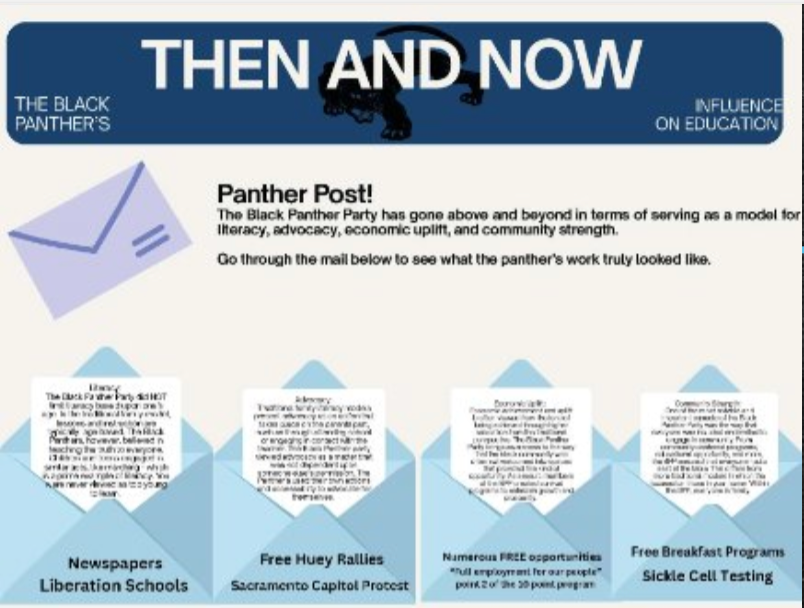
- How has the Black Panther Party served as a model for literacy development, community strength, economic uplift, and advocacy within the Black community?
- In what ways does the Black Panther Party’s programming exceed traditional family literacy models?
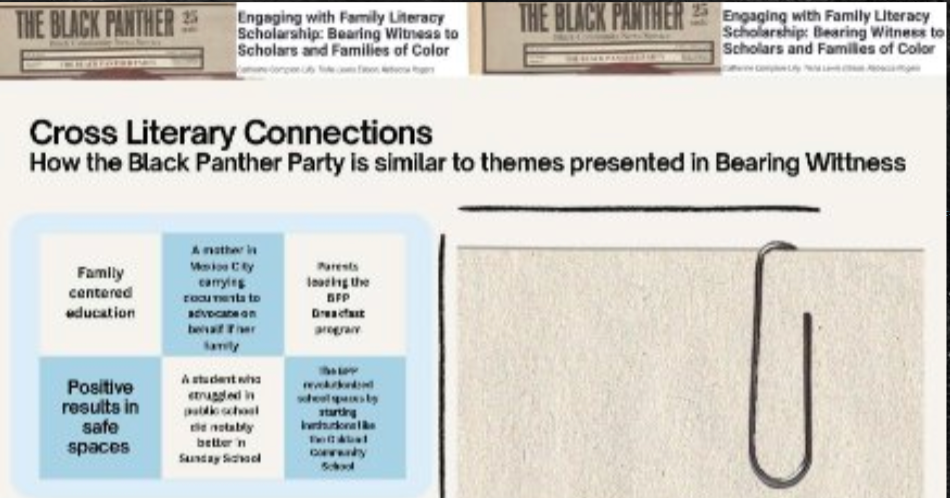
- How do Black Panther Party programs align with themes presented in the Bearing Witness article, which highlights the rich histories of literacy engagement, resistance, and advocacy within families of color?
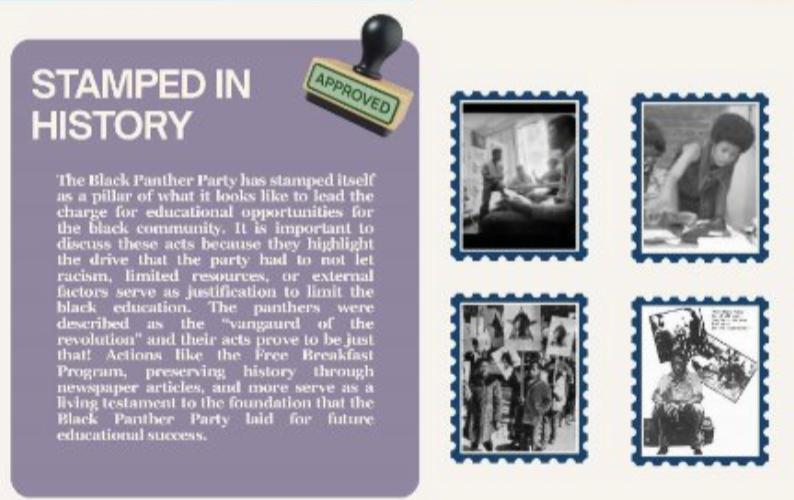
- Why is it important to highlight the Black Panther Party’s community literacy and educational work serve as an act of truth-telling and a centering of Black people’s commitment to our own literacy development and liberation.